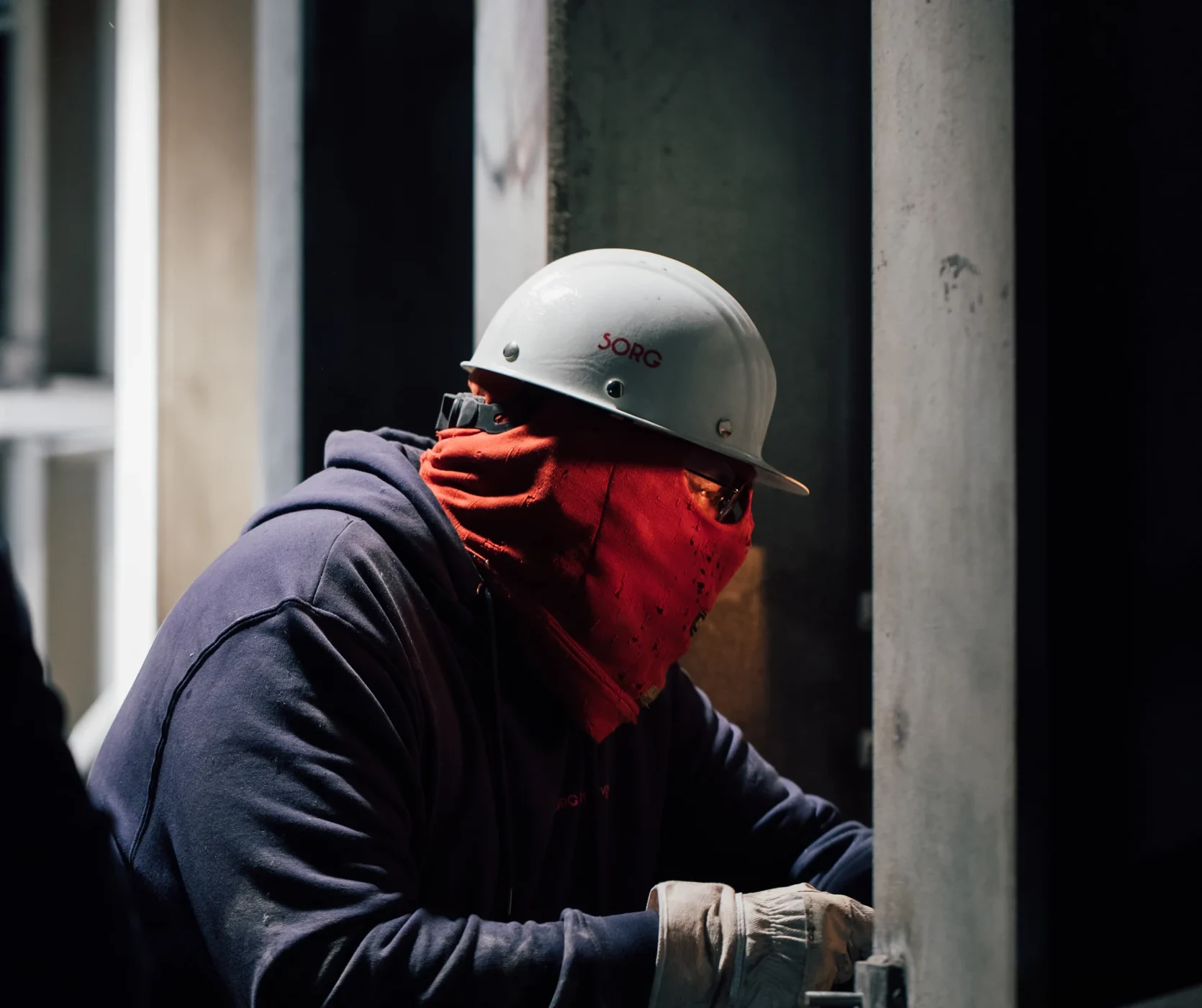
At SKS, we believe in supporting glassmakers through the lifetime of a furnace. For decades, our expert team has developed the highly specialised methods the industry needs. We offer a range of services that not only help maximise the lifespan, uptime and stability of a furnace but also improve workforce safety.
Our continually evolving approach sets us apart and is central to the success of every project, helping our clients deliver the very latest in glass melting and conditioning, furnace efficiency and sustainable melting.
Accurate inspections and assessments are quite simply vital in the glass industry. In-depth data gives us a detailed picture of how the condition of a furnace is impacting the performance, providing the information we need to identify the best course of action.
Over a furnace’s lifetime, the right decisions can have huge implications for quality, safety, productivity and, ultimately, ROI. Endoscopic inspection often plays a role in how those decisions are made.
Endoscopic inspection is a direct way to assess the internal condition of a furnace, which simply cannot be done by external monitoring or indirect measurement alone. Combining the benefits of visual certainty, early detection and actionable insights, endoscopic inspection can be carried while the furnace remains in operation and under full production with no downtime. A water-cooled endoscope can be operated during normal working conditions, which means we can evaluate difficult areas inside the furnace and determine the wear of the refractory materials.
Endoscopy enables our engineers to evalute the conditions of refractory linings, crowns, ports, doghouses, throats, regenerators and other critical components. Early issues such as micro-cracking, joint opening, spalling, corrosion, infiltration and abnormal glass or batch deposits can be detected well before they develop to create thermal anomalies, structural instability or process deviations. Other approaches can diagnose these kinds of problems but are not able to identify the precise location, nature or severity of the issue as accurately as endoscopic inspection.
Visual inspection relies on the knowledge of experienced technicians evaluating the observable condition of accessible furnace areas during normal operation.
With a visual inspection, technicians can identify signs of deterioration such as surface cracking, deformation, spalling, build-up, leakage paths or mechanical damage. These insights often highlight issues that can be addressed before they cause operational disruption, particularly in high-stress or historically vulnerable areas.
Unlike automated or purely data-driven techniques, visual inspection benefits from the understanding of skilled technicians who can recognise patterns of wear, compare current conditions against previous campaigns and distinguish between normal wear-and-tear and critical degradation. Your team can then respond appropriately to this expert analysis.
Findings from visual inspections often form the basis for maintenance decisions, the planning of repairs and further investigation through processes such as endoscopy or test drillings. By clearly identifying what is known, as well as what remains uncertain, visual inspections can help prioritise next steps and ensure maintenance resources are applied efficiently.
Test drillings are a precise method of assessing the refractory condition in areas where visual evaluation is not possible easily, and where remaining material thickness is a critical risk factor, especially in the furnace bottom.
Many furnace failures originate from unseen bottom wear. Test drillings eliminate guesswork by providing hard data on the actual refractory condition, replacing assumptions or estimates with facts.
By drilling small-diameter holes at carefully selected locations, technicians can deliver highly accurate insight into corrosion rates, wear patterns and the proximity of critical thresholds that cannot be inferred reliably from surface observations or process data alone.
Test drillings allow you to make informed decisions about the timing of furnace repairs, life extension measures and planned rebuilds. These insights allow you to take a controlled and proactive approach to maintenance planning, rather than being limited to reactive interventions driven by late-stage symptoms or, worse yet, unexpected failures.
A furnace should deliver a long lifetime of exceptional service. Together, endoscopic inspection, visual furnace inspection and test drilling are processes that help you achieve that goal, delivering a comprehensive picture of furnace health, aligning qualitative observations with quantitative data.