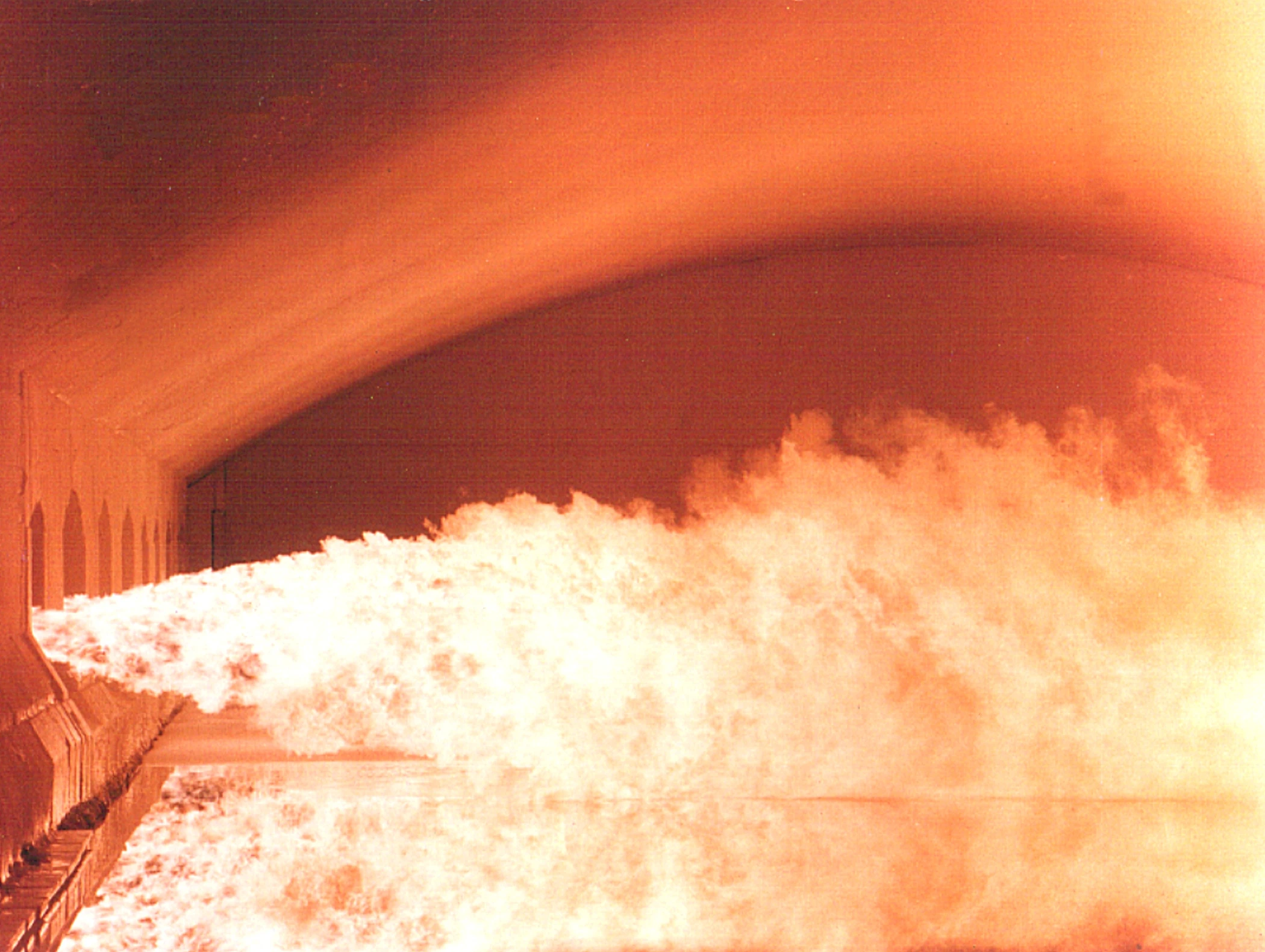
There is no ‘one-size-fits-all’ approach when selecting a furnace. Complex factors are unique to each site and requirement. As masters of melt, we have built up decades of experience allowing us to find the right solutions for our customers.
Firstly, customers provide details of their needs, wishes and technical specifications, and we create an initial working concept. Every customer’s production differs, so we always begin our process by gathering as much information as possible on your particular needs, including the specific types and colour of glass you produce, the raw materials used and the products being made. We then look at practical considerations, such as the available space, the fuel source, any legal requirements and the quality and specifications of the pull.
We then explore less obvious issues, often asking questions that surprise customers. The plant’s altitude above sea level and the heating value of the fuel source can play a crucial role in the design, for example. Small variations in these kinds of areas can have a large impact on the performance of your furnace and so we plan our designs according to your specific situation and requirements. Our goal is to optimise the design of your furnace for your real-world operating conditions.
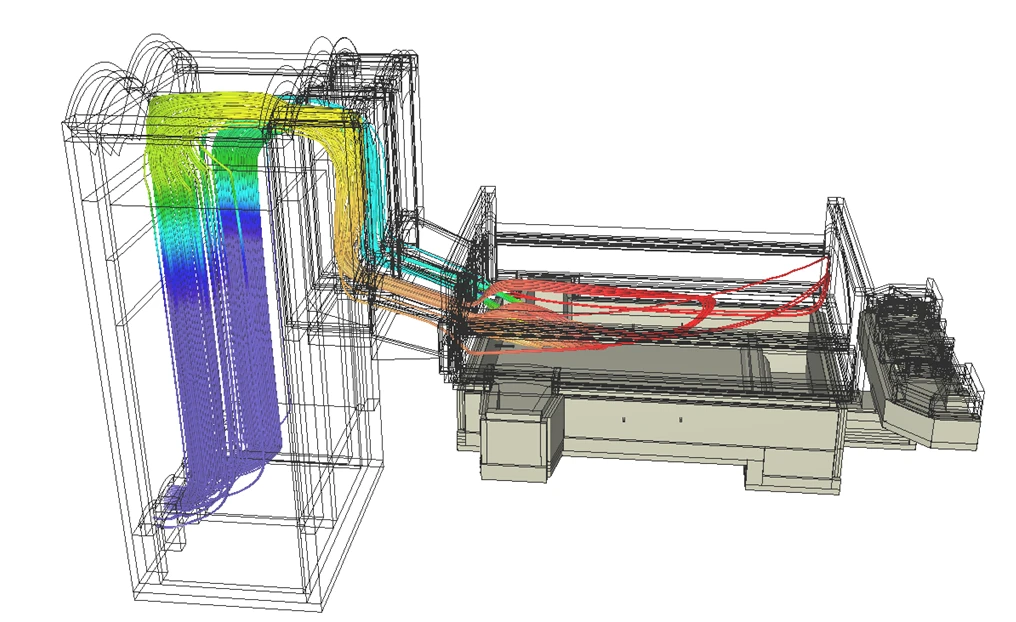
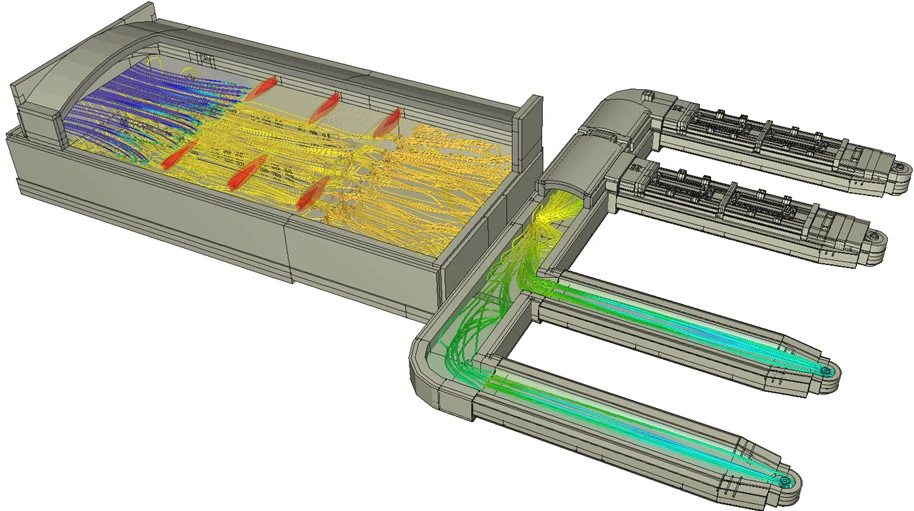
Armed with our research, we use mathematical modelling to predict how the melt will flow through the furnace, allowing us to avoid cold spots, overheating refractories and excessive energy use. Mathematical modelling also helps inform how and where burners and electric boosters are placed and allows us to predict thermal stresses in the furnace walls and crown. The detailed geometry of many furnace parts is critical to optimise energy efficiency, glass quality and pull, as well as minimising emissions.
3D laser scans of the existing building or installation are also sometimes required. The key advantage with laser scanning is the ability to see through obstructions to capture the real, ‘as-built’ conditions. By taking this approach, our team ensure you avoid any design conflicts with existing infrastructure, optimise the precision of the installation and ultimately reduce your costs, risks and downtime. Put simply, 3D laser scans ensure we design for the real environment, not from outdated drawings or assumptions.
For special glass types, we can conduct a concept development phase and melting trials to capture the behaviour of the specific kind of glass.
In the glass industry, the same outcome can be achieved in different ways, depending on the setting, energy source, scale and raw materials. For example, a standard green wine bottle can be produced on a gas-fired, low-boosting regenerative endport furnace or an oxy-fired highly boosted melter.
An intensive consultation and concept phase, collaborating closely with the customer, is a fundamental part of every partnership for us at SORG. Our goal is always a highly efficient furnace that meets your requirements.
Financial considerations are unavoidable when you plan to build a new furnace. Our approach is to help you look beyond the initial outlay and focus on the total cost of ownership (TCO) as well, drawing on the information you provide to support you with detailed and extensive TCO analysis. We want to deliver long-term profitability to our customers.
The purchase price of a furnace can be a relatively straightforward figure to calculate but only represents part of the actual overall costs. In practice, the operating expense over the furnace’s lifetime will typically far exceed the initial capital expenditure. Energy consumption, maintenance requirements, raw material costs and operational reliability all have a direct and lasting impact on the cost of glass production over years of continuous operation.
Any decision needs to be based on a complete assessment that considers factors including (but not limited to):
The true economic performance of different furnace concepts can only be accurately compared by taking these factors together.
Our approach allows the decision-makers on your team to look beyond the headline investment figures and understand how choices, such as furnace type, will influence and improve your facility’s long-term efficiency and costs, as well as helping to minimise operational risks. In many cases, a high initial investment can be justified by low energy consumption, low maintenance needs, a long life of service from the furnace and high production stability.
At this stage of the project evaluation, we can support you with a comprehensive feasibility study, recording and analysing the investment and operating costs over the planned lifetime of the furnace and taking into account site-specific conditions, production requirements and energy use. The result is a clear, data-informed basis for selecting the furnace concept that delivers you the best long-term value, not just the lowest upfront cost.
Choosing the right furnace involves choosing a partner who not only asks the right questions but also understands the realities of the process, production and site, before applying experience, data and engineering insight.
By combining intensive consultation, advanced modelling and real-world site data, we ensure each furnace is precisely tailored to your requirements – technically, economically and operationally.
A rigorous assessment of TCO will help you make the right decision on your furnace. The result is not just a furnace that meets your needs today but future-ready technology, designed to bring your plant a long lifetime of efficient, reliable and cost-effective service.